
History of Infused pre-rolls
The history of infused pre-rolls traces a path from a underground “DIY” counterculture trend in the 1970s to a multi-million-dollar legal market superpower. What began as a messy, handmade experiment has transformed through legalization and laboratory-grade technology into one of the fastest-growing categories in modern dispensaries
Before dispensaries existed, consumers had to engineer their own high-potency products.
- The “Twaxed” Joint: Smokers in the 1970s and 80s began manually boosting flower potency. They would “paint” the outside of rolling papers with crude hash oil or sprinkle powdery kief into hand-rolled cigarettes
- The Problem: These homemade versions were notoriously messy. Because the oil was applied unevenly, the joints burned terribly, constantly “canoeing” (burning down only one side) and clogging up before they could be finished.
The Legalization & Extraction Boom (2000s–2010s)
The landscape shifted radically when California legalized medical cannabis in 1996, followed by Colorado and Washington legalizing recreational use in 2012.
- Concentrate Evolution: As legal markets matured, extraction technology advanced rapidly. Labs began producing exceptionally clean, highly stable concentrates like shatter, wax, and distillate.
- Early Commercial Infusions: Around 2010, California connoisseur culture birthed the first commercial infused joints. Early brands began experimenting with putting measured amounts of wax or distillate into machine-packed cones to ensure a more even burn. However, they remained niche products reserved mostly for high-tolerance consumers.
Staff Picks of their Favorite Infused Pre-Rolls
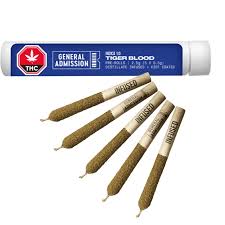 Tiger Blood infused pre-rolls are an ultra-potent, flavour-forward cannabis product primarily produced by the Canadian brand General Admission, Known as one of Canada’s best-selling infused options, they feature an indica-dominant profile with a highly recognizable tropical taste.
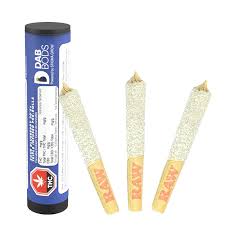 Dab Bods Sour Blueberry 50’s+ Triple Infused Pre-Rolls are a highly potent, flavour-forward Canadian cannabis product crafted by Stigma Grow. They are specifically designed for users seeking extreme potency and a strong candy-like fruit profile
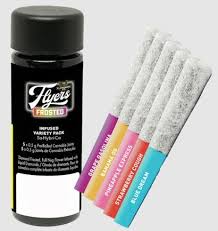 The Claybourne Co. Frosted Flyers Variety Pack is a highly potent, flavour-forward cannabis selection featuring THCa diamond-frosted, terpene-enhanced pre-rolls infused with liquid diamonds. Produced in partnership with Canopy Growth, this multi-strain pack generally ranges between 34% to 40%+ THC and is widely popular among Canadian adult-use consumers for its smooth burn and intense flavour profiles.